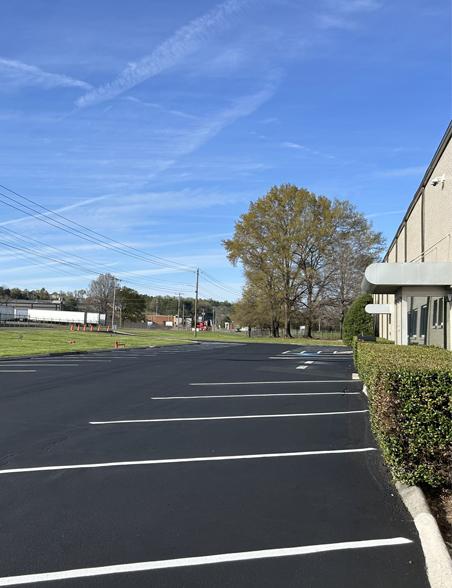
The subgrade carries everything above it. If the native soil stays firm under load, crews can build the pavement section over a stable foundation. If it moves, pumps, or holds too much moisture, that weakness can show through the aggregate and asphalt later.
Soft areas may need undercutting and replacement with suitable material. Other sections may require additional aggregate or stabilization before crews can build the base. Conditions can also change across the same site, especially on larger commercial properties or longer private roads.
A section near an old drainage path may behave differently from higher ground only a short distance away.
Contractors need to identify those changes before the finished pavement hides them.
Proofing Weak Areas Before Base Construction
A site can look firm and still move once it takes concentrated load.
Proofing the prepared surface with construction equipment or loaded vehicles can help reveal areas that deflect or pump before the next pavement layer goes down. When a weak section shows itself at this stage, crews can correct it while the site remains open.
That is much easier than finding the same problem after asphalt installation.
The exact method depends on the project, soil conditions, and construction requirements. The important point is that crews should not assume every square foot of exposed subgrade has the same bearing strength.
Once the supporting ground is stable, aggregate base can be placed and compacted to build the pavement section above it.
Building and Compacting the Aggregate Base
Aggregate does more than provide a smooth surface for paving equipment.
It distributes traffic loads, supports the asphalt mat, and helps create consistent grade across the site. The material needs proper placement and compaction rather than simply being spread to the required elevation.
Loose aggregate can continue consolidating under traffic after the pavement opens. That movement can create settlement above it.
Base thickness also has to fit the intended use. A residential driveway carrying passenger vehicles does not create the same loading as a commercial drive lane or service area. The pavement section should reflect the traffic the property expects rather than use one construction detail everywhere by default.
Water still matters at this stage. Saturated or poorly drained base material loses performance quickly under traffic.
Establishing Grade Before Paving
The finished asphalt follows the elevations established underneath it.
That means drainage needs to be solved before the paver starts placing material.
Commercial sites may need to move runoff toward catch basins, curb lines, swales, or other drainage structures. Residential projects may need to direct water away from garages, buildings, and neighboring surfaces.
Small elevation changes can make a large difference over a parking lot.
A paved surface may look nearly flat while still carrying enough pitch to move water. If crews create a low area in the base, the asphalt above will usually follow that depression.
Trying to fix grade entirely with hot mix can create unnecessary thickness variations and make compaction less consistent.
The base should establish the profile first.
Expanding Existing Parking Lots and Drive Lanes
Expansion work creates a different challenge because new pavement has to meet existing pavement that may already have years of wear and settlement.
The tie-in needs a clean edge, compatible elevation, and enough support underneath to keep the transition from becoming a weak point.
In some projects, crews may need to sawcut or mill the existing pavement to create a better connection. The exact approach depends on the condition and elevation of the old surface.
Drainage also needs another look when a paved area grows.
A lot that drained correctly before expansion may direct more runoff toward the same structures afterward. New drive lanes can also change how water moves across the property. Expansion planning should account for the added paved area rather than assuming the existing drainage pattern will handle it without adjustment.
New Commercial Paving in Marysville
New commercial pavement often contains several different use zones.
Customer parking may carry mostly passenger vehicles. Main drive aisles see continuous traffic. Delivery routes, loading approaches, and service areas may handle heavier vehicles.
Those differences should inform the paving plan before construction begins.
Nance Pavement Solutions works on commercial lots, access lanes, parking expansions, and other asphalt surfaces throughout the Marysville area. We evaluate how the property will use each section along with the conditions underneath it.
After paving, parking lot striping can establish spaces, traffic flow, and designated areas once the surface is ready. Longer-term maintenance may include repairs and sealcoating when the pavement reaches the appropriate stage.
Those later services work better when the original pavement section starts with good support.
Residential Driveways on New and Existing Homes
New residential paving follows the same structural logic at a smaller scale.
The driveway needs stable support, a compacted base, and grades that fit the home, street, garage, and surrounding property. Edge support also matters because residential vehicles often travel close to the sides of narrower pavement.
New construction can create additional concerns if the ground around the home has recently been disturbed. Utility trenches, backfilled areas, and recently graded sections may settle differently from undisturbed ground.
Those areas deserve attention before crews cover them with asphalt.
For existing homes adding a parking pad or extending a driveway, the new section needs to work with the older pavement instead of simply butting against it.
Build the Structure Before the Surface
Fresh asphalt can hide a lot of preparation work. It cannot replace it.
Subgrade stability, aggregate density, drainage, lift placement, and compaction all contribute to the pavement section. When one of those elements is weak, traffic eventually finds it.
Nance Pavement Solutions handles new paving, expansion work, asphalt repairs, sealcoating, and striping throughout the Marysville area. For property owners comparing asphalt paving contractors Marysville OH projects can use, the most useful questions often come before the asphalt mix ever reaches the site: what is underneath, where will the water go, and what loads will the finished pavement carry?